
If you’ve ever been stung by an insect, you know the feeling. If pain had a leaderboard, insects reign at the top.
Somewhere in a lab (and sometimes on a field expedition), entomologist Justin O. Schmidt voluntarily endured repeated stings to create what might be the most bizarre yet interesting scale in science: the Schmidt Sting Pain Index. It rates stings from a polite “hey, excuse me” (Level 1) to “I’m dead” (Level 4).
With that in mind, let’s take a deep breath and dive into some of the most painful stings in the world, ranking them from the very worst to those that are still, unfortunately, very bad.
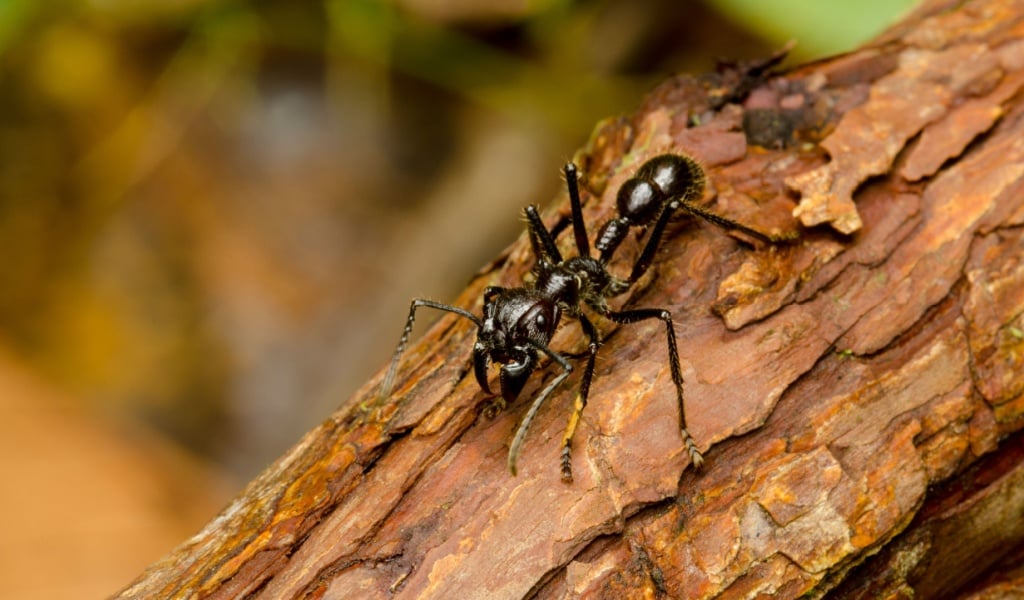
Bullet Ant: Pain at Its Purest
Level of pain: 4.0+
If pain could punch you in the face, it would be the bullet ant. With a sting so severe (it’s frequently compared to being shot), this South American horror tops the list. And that’s actually where the name comes from, not a lyrical exaggeration. The pain can continue up to 24 hours of throbbing, burning misery; it doesn’t just spike and then subside. It’s like walking on flaming charcoal with a nail in your heel, according to Schmidt, who described it as “pure, intense, brilliant pain.”
Want to know something even worse? This ant features in initiation rituals among some Indigenous communities, where young participants wear gloves filled with the ants—a unified test of stamina, courage, and perhaps a high tolerance for pain.
Tarantula Hawk Wasp: Brief, Intense, and Electrifying Pain
Pain Level: 4.0
Despite its intimidating name, this wasp does not target humans—its prey is tarantulas. However, if you cross its path, the outcomes can be severe.
The sting is described as blinding and electric, akin to the shock of sticking a fork into an electrical socket. Schmidt equated it to the shock from dropping a hair dryer into bathwater. Thankfully, the pain is usually brief, lasting only a few minutes. But those few minutes? Absolute chaos.
Fascinatingly, many professionals say the best reaction isn’t panic, it’s stillness. The intensity can make you disoriented, so collapsing safely is sometimes the best course of action.
Executioner Wasp: Pain With a Scar
Pain Level: (Unofficially) 4+
Not officially on Schmidt’s original list, however, it’s generally considered one of the worst. This wasp delivers a sting so vicious that people state lasting tissue damage and even scarring.
It’s not just pain; it’s pain with repercussions. And unlike certain stings that fade from memory, this one can leave a physical reminder that lasts long after the initial shock has passed.
Warrior Wasp: The Group Torture
Pain Level: 4.0
The warrior wasp doesn’t just sting, it commits. Its pain has been referred to merely as torture.
Unlike the tarantula hawk, this insect doesn’t rush. Its pain lingers, spreading through your body like a slow, deliberate punishment. Also, these critters don’t travel alone, so a single sting quickly becomes a collective ordeal—drawn out, measured, and as painful as it sounds.
Velvet Ant: Adorable Wingless Wasps
Pain Level: 3.0–3.5
Though commonly called an ant, this is in fact a wingless wasp. Its fuzzy, bright appearance contrasts with the intensity of its sting, which ranks among the most painful in the insect world.
Known as the “cow killer” (no, it doesn’t actually kill cows), this insect’s sting brings intense, long-lasting pain that can leave you stunned and questioning reality. Its bright color serves as a warning, nature’s way of saying, “stay away.”
Yellow Jacket: Violent and Unapologetic
Pain Level: 2.0
This insect is equivalent to that one person who picks fights for no reason.
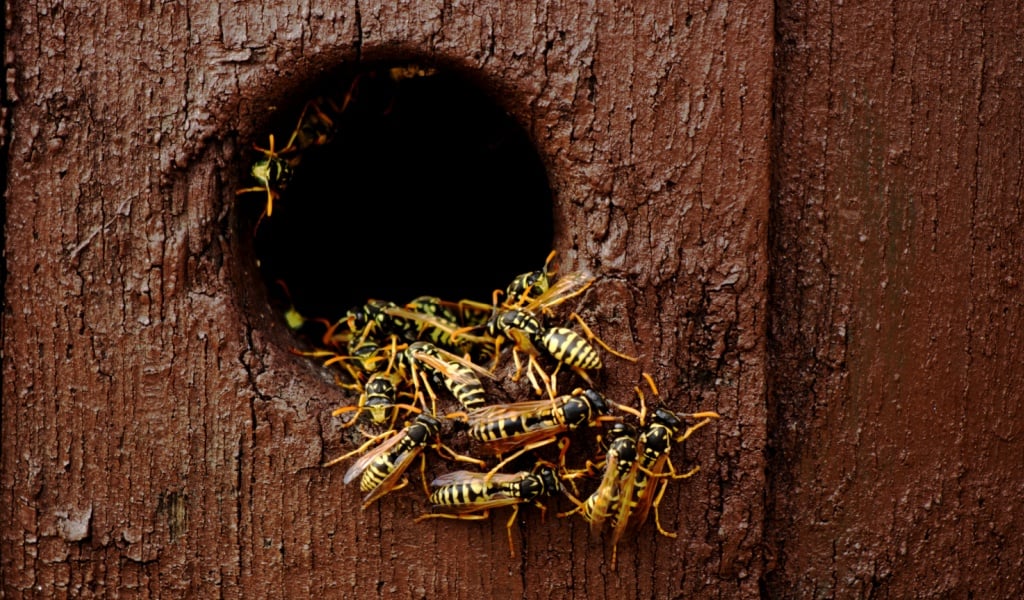
Yellow jackets are not the most painful; however, they are among the most aggressive. According to Schmidt, their sting is hot and smoky, like a cigarette being extinguished on your skin. And they don’t just sting once. They commit to the task, frequently chasing perceived threats and delivering several stings in quick succession.
Red Harvester Ant: Slow, Persistent Pain
Pain Level: 3.0
Dropping down a tad, we meet the red harvester ant. Its sting isn’t fiery, but persistent. According to Schmidt, it feels like somebody drilling into an ingrown toenail.
It’s the type of pain that doesn’t scream; it grinds. And since these ants live in colonies, multiple stings can soon turn discomfort into something much worse.
Paper Wasp: The Burning Pain
Pain Level: 3.0
Paper wasps are common, which is petrifying because their sting feels like pouring acid onto a paper cut.
It’s sharp and burning, lingering just long enough to make you regret every life choice that brought you close to their nest. They’re also remarkably territorial, meaning even accidental disturbances, such as brushing against a branch, can trigger an attack.
Bald-Faced Hornet: An Agonizing Blow
Pain Level: 2.0
This one feels like your hand getting trapped in a rotating door. Not the worst individually, however, like yellow jackets, they tend to attack in groups. So, the pain stacks swiftly.
Their nests are often built in visible areas, such as trees or building eaves, making accidental encounters common.
Fire Ant: Tiny but Vicious
Pain Level: 1.2
Ending on a somewhat less terrifying note: the fire ant. Its sting is sharp and sudden, like a static shock that decided to get personal.
Alone, a fire ant sting is manageable, but disturbing a mound can trigger multiple stings in rapid succession, escalating discomfort. The resultant itchy pustules may persist for days, worsening the situation.
Why Pain Was Made This Intense by Evolution
So why would such tiny creatures develop such extravagant defenses? Because pain is a teacher.
Once stung by something like a bullet ant, predators are hesitant to be around them again. The message “stay away” is emphasized by aggressive conduct, bright colors, and the loud buzzing of these tiny creatures.
As a smart evolutionary trick known as “Batesian mimicry”, many less dangerous insects actually mimic the appearance of these painful species. They’re basically bluffing, and it works.
Admire From a Distance
The Schmidt Sting Pain Index is equal parts science experiment and extreme endurance test—a reminder that even something as personal as pain can be quantified, compared, and clearly described.
From the bullet ant’s all-day pain to the yellow jacket’s relentless sting, these tiny insects prove one thing: nature doesn’t need to be big to be frightening.
Therefore, the next time you hear a buzz nearby, pause before you swat. Take a step back, give it space, and keep in mind that you might be one wrong move away from meeting a small creature with a very big attitude.
Always observe from a distance.