
Are you tossing away salmon skin without a second thought? Every year, up to 40% of edible fish parts—like nutrient-rich salmon skin—end up discarded. But salmon skin is packed with nutrients that can rival the fillet itself. This article may just change the way you view this often-overlooked part of the fish.

Salmon skin actually has a plethora of health benefits. Here is a quick look at what a typical serving of salmon skin offers before we dive into the details:
• Calories: ~50–70 per serving
• Protein: ~10g
• Healthy fats (Omega-3): ~3–5g
• Carbohydrates: 0g
• Key vitamins: B6, B12, D
• Key minerals: Selenium, Potassium
Now let’s take a closer look at each of these benefits.
Good Source Of Protein
Salmon skin supplies about 10 grams of protein per serving, supporting tissue repair and muscle growth.
Rich In Healthy Fats And Omega-3
Salmon skin contains omega-3 fats, which provide energy and support overall health.
No Carbohydrates
Plain salmon skin has no carbohydrates, so it does not quickly raise blood sugar levels. This makes it suitable for people following a low-carb or ketogenic diet.
Supports Bone And Joint Health
Salmon skin contains nutrients like protein, vitamin D, and omega-3. Vitamin D helps the body absorb calcium, which is important for strong bones and joints.
May Help Reduce Cancer Risk
Omega-3 fatty acids may help reduce the risk of some cancers by lowering inflammation and supporting healthy cells.
Supports Brain Health
Omega-3 fatty acids — particularly DHA (docosahexaenoic acid) — are a key structural component of the brain. They are known to support cognitive function, improve focus, and may help reduce the risk of memory-related conditions such as dementia and Alzheimer’s disease.
Good For Eye Health
DHA, the same omega-3 found in salmon skin, is also a major structural component of the retina. Consuming adequate amounts may help protect against age-related macular degeneration and dry eye syndrome, two of the most common vision problems in older adults.
May Support Gut Health
Nutrients in salmon skin, including omega-3 fatty acids, may help reduce gut inflammation and support a healthier digestive lining. Some research suggests these fats can positively influence gut bacteria balance, though further studies are needed to confirm the full extent of these benefits.
Good For Heart Health
Omega-3 fats are well known for supporting heart health and may help lower the risk of heart disease.
Supports Skin And Hair Health
Salmon skin offers protein and healthy fats to keep your skin supple and hair resilient. These nutrients also boost collagen, helping maintain a youthful appearance. Omega-3 also supports collagen production in the body, which is important for healthy skin, hair, and nails.
May Help With Wound Healing
Some studies suggest that the collagen and proteins in salmon skin may support the body’s wound-healing process by promoting tissue repair and reducing inflammation at the injury site. However, more research is still needed to draw firm conclusions.
Provides Vitamins And Minerals
Salmon is a good source of vitamins B6, B12, and D, as well as minerals such as selenium and potassium. Some of these nutrients are also found in the skin, though the amount can vary.
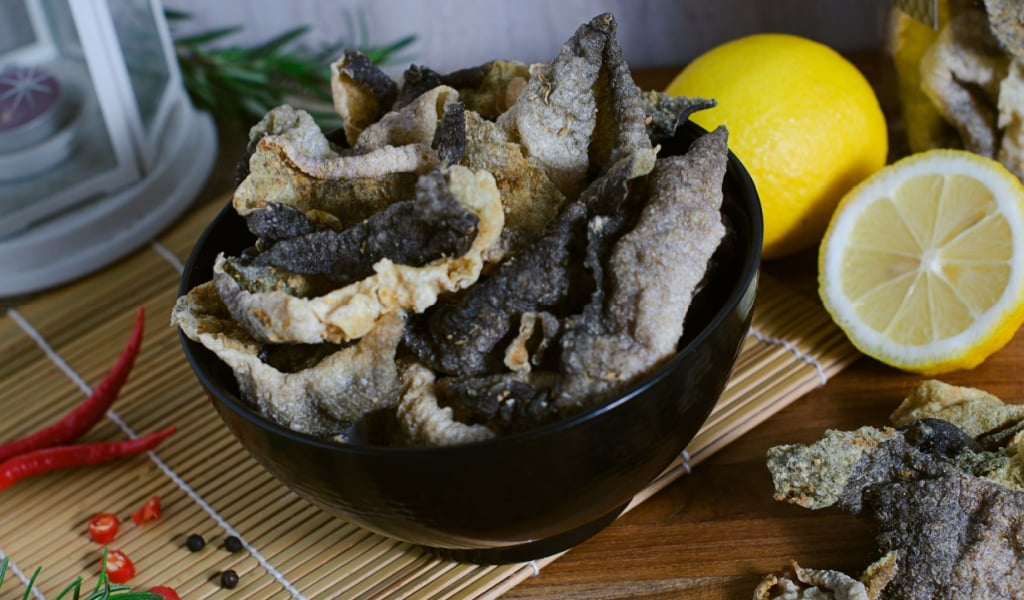
Ways To Cook Salmon Skin
Now that you know how beneficial salmon skin can be, it makes sense to make the most of it. If you enjoy salmon, consider buying a whole fish, as it is often more affordable and lets you use every part. You can also ask the fish seller to remove the skin carefully and keep it for you.
For safety, try to choose wild-caught salmon whenever possible, as it often has lower levels of contaminants than farmed salmon. Be aware that packaged or pre-seasoned salmon skin snacks may contain high sodium, preservatives, or added ingredients, so check labels carefully. Although salmon is generally low in mercury compared to some other fish, it’s still wise to eat it in moderation as part of a balanced diet.
One easy way to enjoy salmon skin is to cook it along with the fish. When cooked properly, it becomes crispy, helping keep the fish moist.
You can also cook the skin on its own. Lightly brush with oil, season, and cook until crispy. Enjoy it as a snack or add to salads for extra crunch and flavor.
Pan-frying is one of the most popular methods. Heat a pan over medium-high heat, add a small amount of oil, and place the skin side down. Press it flat with a spatula for the first 30 seconds to prevent curling. Cook for 3–4 minutes, until the skin is golden and crispy, then briefly flip.
Bake, roast, or air fry the skin. For a quick and easy meal, place it in the oven with oil and seasoning, and bake for about 10 minutes until golden and crispy.
A Simple Sri Lankan Recipe to Try
Here is an easy Sri Lankan-style recipe you can follow to enjoy salmon with its skin.
(Recipe for 500g Salmon) Grind together pandan leaves (about 3 inches), one cinnamon stick, 2 teaspoons of pepper, 1 teaspoon of cumin, ¼ teaspoon of turmeric, 4 pieces of soaked Malabar tamarind (goraka), 4 cloves of garlic, ½ inch of ginger, salt to taste, and the juice of half a lime until it forms a smooth paste.
Coat the salmon evenly with the paste. Wrap in a banana leaf and bake at 180°C for 15-20 minutes.
This dish is often enjoyed with dhal and bread. Feel free to pair it with your favorite meals and discover what suits your taste.
Conclusion
Salmon is a great addition to your diet, providing protein, vitamins, and omega-3 fatty acids for overall health and flavor.
Next time you are about to remove salmon skin and toss it out, consider keeping it. From supporting brain and heart health to promoting healthy skin and strong bones, salmon skin is nutritious and versatile. It is crispy, flavorful, and can be enjoyed in various ways. Whether you bake, pan-fry, or season it, salmon skin deserves a place on your plate, not in the trash.